Thesis
Antarctic animation:
expanding scientific data
with gesture and line

Abstract
It is difficult to understand Antarctica through scientific data alone, and yet it is important to know about because Antarctica's changing environment impacts upon our own. Statistical information does not convey the sense of a place. However, digital animation can be used to combine climate change data from Antarctica with a sense of being there, and to convey this information on-line.
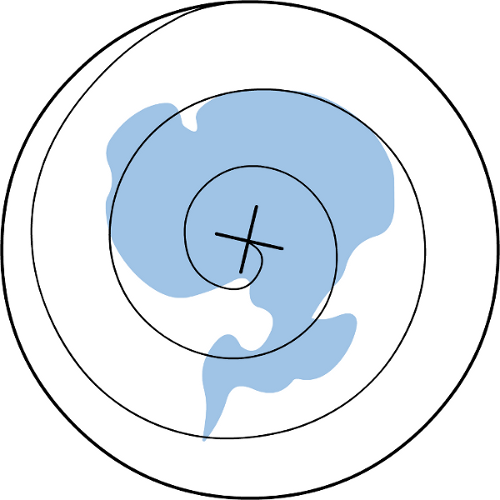
Interviews with expeditioners, and workshops with other artists, revealed responses to Antarctica that were conveyed through a range of texts. These include gestures, art works, data sets, sounds, and spoken and written words. Further gestures and line drawings were made in response to these texts, and combined through animation. Circling, spiralling, and crossing forms were used to describe structures within the Antarctic ecosystem. These forms, which reflect structures within the human body through which they are made, are elemental. They convey a primal sense of our connection to places.
Animations were presented at international conferences on Antarctic art and science, and published on-line for public access and comment. Responses to the work on the website, http://www.antarcticanimation.com, suggest that the animations connect to individuals at a profound level, and contribute to the fields of Antarctic arts, science, and visual communication.
To communicate changes that are happening in other places, methods that were used can be applied. Animated elemental forms can expand the meaning of data to include a visceral sense of connection to environments that has often not been available at a conscious level.